Massachusetts Refrigeration License #RC-148128
Massachusetts Master Sheet Metal License #2284
Massachusetts Sheet Metal Business License #493

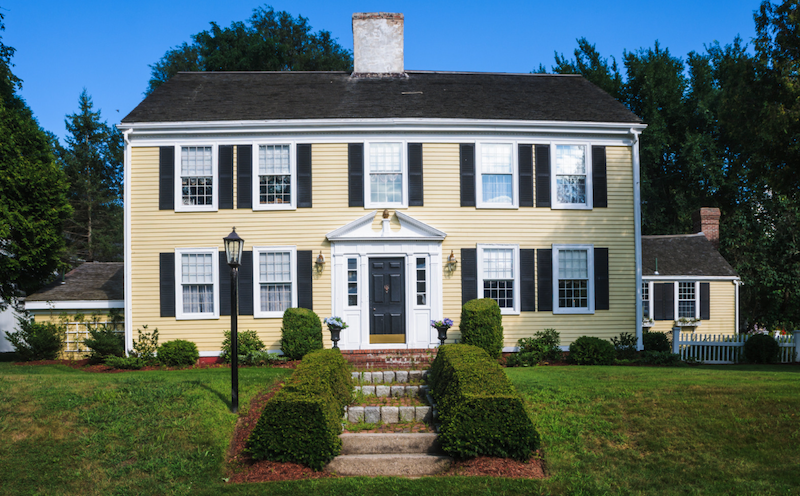
New England is known for its rich history, beautiful seasons, and unpredictable weather. While the changing climate is part of the region's charm, it also makes choosing the right HVAC system especially important. Your heating and cooling equipment needs to handle bitter winter temperatures, humid summers, freezing rain, nor'easters, and dramatic temperature swings during the spring and fall.
The age and design of many New England homes also play a major role in determining which HVAC system is the best fit. Historic homes, additions, and properties without existing ductwork often require different solutions than newer construction. The right system depends on several factors, including your home's layout, insulation, available fuel sources, existing ductwork, efficiency goals, and personal comfort preferences.
Because your HVAC system is a long-term investment, choosing wisely can improve comfort, lower monthly utility costs, reduce your environmental impact, and even increase your home's value.
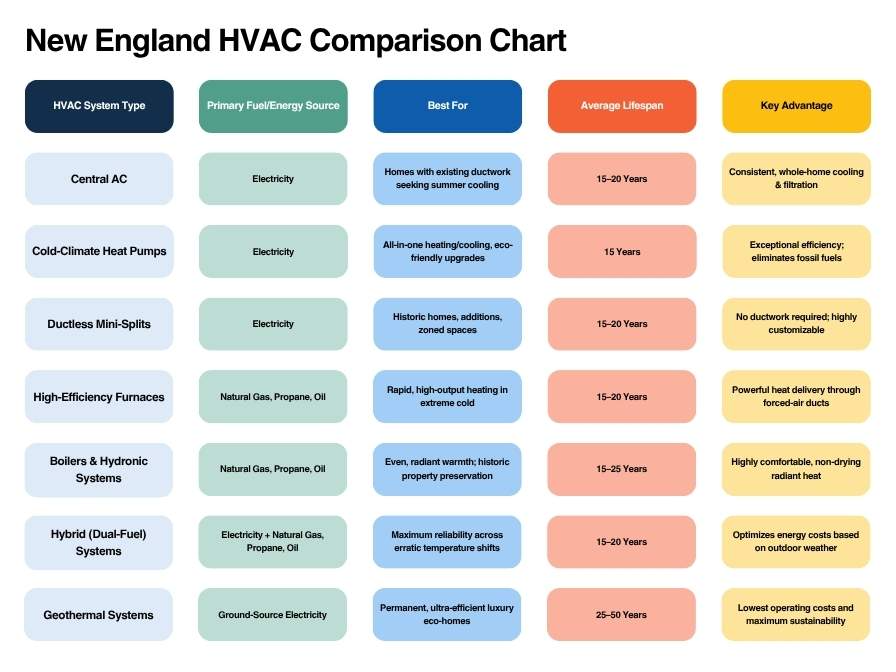
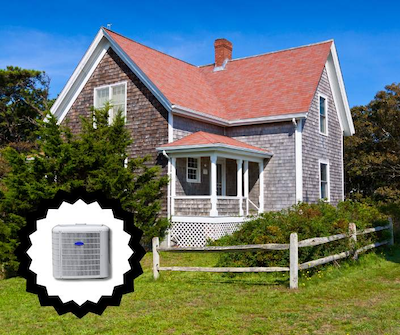
Central air conditioning uses an outdoor condenser paired with an indoor air handler or furnace to cool your home. Conditioned air is distributed through a network of ductwork and vents, providing even cooling throughout the house.
Many New England homes already have ductwork connected to a forced-air heating system. Adding central air is often a straightforward upgrade that delivers reliable cooling and humidity control during hot summer months.
Rather than generating heat, heat pumps transfer it. During the winter, they extract heat from the outdoor air—even in below-freezing temperatures—and move it indoors. During the summer, the process reverses to provide efficient air conditioning.
Today's cold-climate heat pumps are specifically engineered to perform reliably through harsh New England winters.
Cold-climate heat pumps provide efficient heating during the winter and excellent cooling during the summer, making them ideal for New England's changing seasons. Ductless mini-split models are especially popular for older homes, additions, and spaces where installing ductwork isn't practical.
Gas, propane, or oil furnaces generate heat through combustion before distributing warm air throughout the home using ductwork.
Furnaces have been a trusted heating solution throughout the Northeast for decades. Many homes are already equipped with ductwork, making replacement straightforward while providing dependable comfort throughout the coldest months.
Instead of heating air, boilers heat water. The heated water or steam travels through radiators, baseboard heaters, or radiant floor systems to warm your home.
Many historic New England homes were originally built with boiler systems. Hydronic heating offers steady, comfortable warmth and can be an excellent solution for homes without ductwork.
Hybrid systems combine an electric heat pump with a gas or propane furnace. The heat pump operates during milder weather for maximum efficiency, while the furnace automatically takes over during extremely cold temperatures.
With unpredictable winters and rapidly changing temperatures, hybrid systems provide homeowners with the efficiency of a heat pump and the dependable performance of a furnace when outdoor temperatures become exceptionally cold.
Geothermal systems use the consistent underground temperature to heat and cool your home. Underground piping transfers heat between your home and the earth, providing one of the most efficient HVAC solutions available.
Although geothermal systems require a larger upfront investment, they offer decades of reliable comfort and exceptionally low operating costs. For homeowners planning to stay in their home long-term, geothermal can provide substantial energy savings while reducing dependence on fluctuating fuel prices.
There isn't a one-size-fits-all HVAC solution for New England homes. The best system depends on your home's construction, existing equipment, energy goals, budget, and comfort preferences.
Whether you're upgrading an aging system, building an addition, or replacing equipment that no longer meets your needs, a professional HVAC evaluation can help you identify the most efficient and cost-effective solution.
If you'd like help exploring HVAC system options, contact our customer service team at (978) 750-8282 or office@preferredairinc.com. We're happy to help you find the best solution for your home or business.
Preferred Air has been offering trusted service for 35 years. We'd love to have you join our community by scheduling a service or a complimentary professional system evaluation and estimate for upgrades or replacements of your current system with our factory-trained expert technicians.