Massachusetts Refrigeration License #RC-148128
Massachusetts Master Sheet Metal License #2284
Massachusetts Sheet Metal Business License #493
New Hampshire Gas Fitter License #GF1709043
New Hampshire Oil Heating License #HT1900352

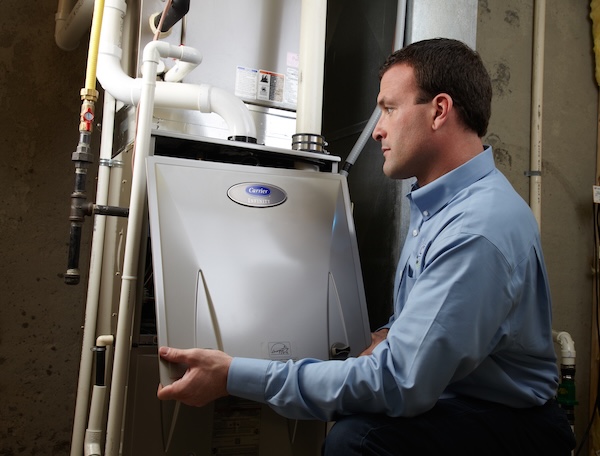
As HVAC professionals, we love seeing customers take an active role in caring for their equipment. When homeowner involvement is paired with professional maintenance, it can help extend equipment life, improve indoor air quality, and maintain system efficiency. However, not every HVAC task is suitable for a DIY approach.
Even the handiest individuals can run into trouble when a maintenance or repair project requires specialized knowledge or experience. HVAC systems are complex, and attempting a repair beyond your comfort level can lead to additional problems, costly damage, or safety concerns. In other words, it may be time to put the YouTube tutorial away!
Fortunately, there are several simple maintenance tasks you can handle yourself before calling your HVAC technician. Many are outlined in your equipment's owner's manual, while others are fairly straightforward. In this blog, we'll cover which HVAC tasks are safe to tackle yourself and which are best left to a professional.
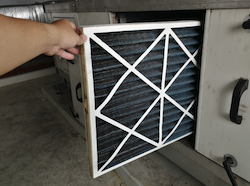
Your air filter plays an important role in your HVAC system. It captures airborne particles and debris, helping prevent them from circulating throughout your home or business. However, a dirty filter can do more harm than good. When clogged with dust and debris, it restricts airflow, forcing your HVAC system to work harder and potentially increasing energy consumption. If you've noticed an unexplained spike in your energy bills, your air filter may be worth checking.
Certain circumstances can cause your filter to become dirty faster than usual. Pets, seasonal allergens, increased occupancy, or a higher-efficiency filter may all affect how frequently it needs to be changed. While a higher-grade filter can be beneficial in the right circumstances, it may require more frequent replacement and must be compatible with your system.
Depending on your equipment and filter type, you may need to clean your filter rather than replace it. Either way, following the manufacturer's guidelines and your HVAC technician's recommendations will help keep your system operating efficiently and support healthy indoor air quality.
How to DIY: Start by locating your air filter. Your owner's manual should tell you where it is and which replacement filters are compatible with your equipment. Always turn off your HVAC system before removing the filter. If it's disposable, replace it when dirty. If it's washable, follow the manufacturer's cleaning and drying instructions. You can also write the replacement date on the filter frame to help keep track of how long it lasts.
While many homes and businesses have ceiling vents, floor registers can easily become blocked by rugs, furniture, or other items. If you are experiencing inconsistent temperatures throughout your home or business, check to make sure your vents are not obstructed. A blocked vent can interfere with airflow and prevent conditioned air from reaching the space as intended.
While checking your vents, take a moment to wipe away any dust or debris that has accumulated around the register. For a little extra cleaning, you can remove the vent cover and use your vacuum hose to remove loose debris just inside the opening. This can help keep the area cleaner between professional duct or vent cleanings.
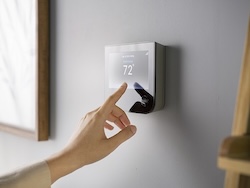
As the seasons change, your thermostat settings may need to change, too! Whether you have a programmable or smart thermostat, start by reviewing your schedule. Adjusting your settings to accommodate changes in occupancy, daily routines, or colder mornings can improve comfort and help manage energy use.
You may want to experiment with different settings as the weather fluctuates, particularly during the shoulder seasons of spring and fall, when you may switch between heating and cooling.
Whenever you adjust your thermostat, pay attention to how your system responds. If it's set to heat but is blowing cool air for an extended period, or you notice unusual behavior, it's worth contacting an HVAC professional to investigate.
If your home or business has multiple thermostats, take this opportunity to check their batteries, too. Replacing weak batteries can help prevent unexpected interruptions in heating or cooling.
As temperatures drop here in New England, it's easy to overlook your outdoor HVAC equipment. However, fall winds and winter storms can leave leaves, branches, and other debris around your unit. Keeping the area clear of leaves, overgrown grass, snow, ice, and other obstructions is essential for maintaining proper airflow and system performance.
If you have landscaping, outdoor furniture, or other objects near your unit, make sure they aren't restricting airflow. When tidying up, you can turn off the system and gently wipe down the exterior. Avoid using a power washer, removing equipment panels, or reaching through the fan guard. If the interior of your unit needs cleaning, contact your HVAC technician to handle it safely.
Some HVAC tasks require specialized tools, technical knowledge, or training to complete safely. These are best left to a qualified HVAC professional:
Still unsure if you can DIY it? Contact our customer service team at (978) 750-8282 or office@preferredairinc.com. We're happy to help you find the best solution for your home or business.
Preferred Air has been offering trusted service for 36 years. We'd love to have you join our community by scheduling a service or a complimentary professional system evaluation and estimate for upgrades or replacements of your current system with our factory-trained expert technicians.